
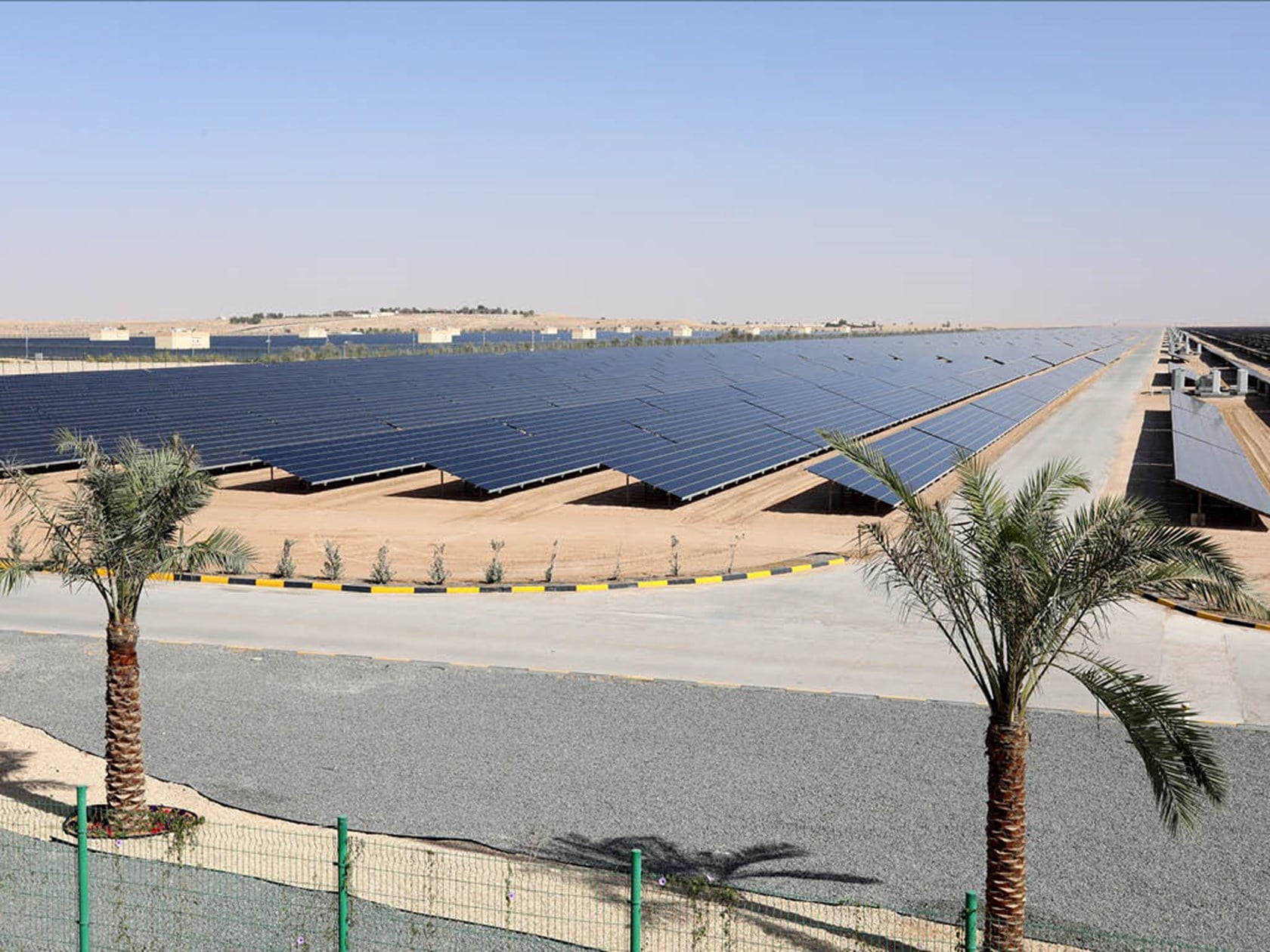
In this episode, Mark Lee is joined by Jennifer Park, Head of Impact at ALTÉRRA, and Peter Rawlings, Head of Middle East at ERM, to explore how climate investment can accelerate the global net-zero transition while delivering impact and commercial returns. Their conversation examines ALTÉRRA’s approach to mobilizing capital at scale, attracting investors to growth markets, and unlocking opportunities across clean energy, industrial decarbonization, and climate technology. They also discuss the Middle East’s growing role in climate leadership and how capital, innovation, and practical solutions can drive resilience, economic value, and the transition globally.
Related content:
- Inflection Point - The Iran War and the Energy Transition | Podcast | ERM
- The Next Phase of Sustainable Investing: The Era of Repricing | ERM
- Rupture Point: Sustainability Trends Shaping 2026 | Podcast | ERM
Subscribe to the podcast
Transcript
The transcript highlights below have been edited for clarity
Mark Lee
Hi, everyone, and welcome to this next episode of the ERM Sustainable Connections podcast. I'm Mark Lee, Global Director of Thought Leadership at ERM. We have a really interesting conversation today. Topical, given the topic itself is climate and climate investing. We're going to look specifically at the role that climate investing can play in accelerating the global net zero transition. We're going to do that by looking specifically at an initiative or an organization called ALTÉRRA and how ALTÉRRA is mobilizing capital at scale to address climate challenges while delivering commercial returns. How do we have our cake and eat it too?
ALTÉRRA is the world's largest private climate investment fund. It was launched by the UAE, the United Arab Emirates, at the Dubai COP28 in 2023. So short history, but lots of impact already over just a couple years, pushing three years now. The purpose is to help drive global green financing and to mobilize $250 billion for climate action by 2030, a very ambitious future path to 2030 in terms of what it wants to get done. We'll let the conversation stray as well to explore the Middle East's growing role in climate leadership, including capital mobilization, transition support, the renewables growth that's happening in the region and adaptation measures that are being taken, and what it takes to unlock investment and impact across both developed and developing markets. I am not going to do this by myself. I am really happy to be joined by two people who know these topics and the region we're going to talk about really well. Those people are Jennifer Park, who is the Head of impact at ALTÉRRA, and then my colleague Peter Rawlings, who is our lead in the Middle East at ERM.
First thing I want to do is to say welcome, Jennifer and Peter, and then let you introduce yourselves. Jennifer, I'd love to hear a little bit about how you landed in this role and what you're doing in it.
Jennifer Park
Thanks so much, Mark. It's really great to be here with you and Peter. My name is Jennifer Park. I'm a partner at ALTÉRRA, heading our impact function here. My job is to help ensure that our investments and partnerships are all in alignment with ALTÉRRA's mandate, which is to accelerate the climate transition while ensuring that we deliver both returns and impact, really showing that these two things are mutually reinforcing as opposed to being mutually exclusive. Our overarching goal is to mobilize $250 billion in climate investments by 2030, including in growth markets, which is what we call emerging markets and developing markets.
Here at ALTÉRRA, we also want to look beyond our investments. The impact team is here to ensure that we are leveraging ALTÉRRA's unique position in the investment landscape and in the broader UAE ecosystem to really move the needle on how and where capital is flowing, how we can help transform how the international community views what a climate investment is, and really transform how people perceive what a climate investment is and where these investments should be happening.
Before I joined ALTÉRRA, I was a senior advisor at the United Nations in the Secretary General's office, supporting his climate action agenda. I also worked in the office of the Secretary General before him, Ban Ki-moon. I think it really is a testament to ALTÉRRA's seriousness to hire and bring someone like me on board to really lead on the impact work because as an organization, we really do see the climate transition as fundamentally a systems challenge. You really need to take into account not just the investment perspective and the commerciality of investing in the climate transition, but you need to take into account the policies behind it, the technology solutions that are advancing the transition, and how you incorporate all sectors of the economy, all sectors of society to really come together in partnership to address such a global and transversal challenge.
Like I said, it really is a testament to ALTÉRRA to have a team specialized in climate and to understand that you need to bring all these different perspectives together with country experience on the ground, to look at the opportunities and investments within a broader context and the political environment that it operates in. I think that's particularly helpful as ALTÉRRA looks at, as part of its mandate, how it catalyzes further climate investment into growth markets and engages catalytic investors as well as institutional capital to bring solutions and innovative approaches across the board.
Mark Lee
I'm going to ask for a couple of quick follow-ups, Jennifer, before I get Peter to introduce himself too. One of them is what does impact agenda mean for ALTÉRRA? It seems that climate investing is a critical impact. So, it sounds like there's more to that. What's the breadth of the impact agenda under your remit?
Jennifer Park
We define impact in a multidimensional way. It's not just about the direct and indirect climate impact that all our investments and our engagements bring, it goes beyond a tick box to make sure that all our investments and engagements are green and they are climate investments, it’s what are we doing to help accelerate the transition? What are we bringing into space? And so, a second layer of how we look at impact is, how are we stacking up against our mobilization goal? How are we bringing investors off the sidelines and into markets that are underserved or into solutions that we think have a lot of impact or what we are providing additionally in terms of in the financial sense? And then going into our third layer is additionality. So that includes the financial additionality, which I just touched upon, but also non-financial additionality. How are we leveraging the unique space that ALTÉRRA occupies and the support that we have from the UAE government as well to really catalyze the space? What are we doing to really move the needle in terms of climate investing?
Mark Lee
I'm going to run towards Peter and just want to give you a chance to introduce yourself, your role, and what ERM is doing in the region. You'll have to remind me how many months you've been stationed in the Middle East yourself. I'd love to hear a tiny bit about what the experience has been like and what you hope to have accomplished over the next few years.
Peter Rawlings
Thank you, Mark. I'm excited to be on this discussion. Peter Rawlings, I'm a partner with ERM. I've been with ERM 20 years now, so quite a while.
Mark Lee
Congratulations!
Peter Rawlings
Thank you. In recent times though, my roles have regularly interacted between the finance sector and the climate agenda. For a while, I helped lead a lot of the work we did at an ERM wide level around how and what the energy transition means to our clients, to our business, to our own organization. My last role prior to relocating was very much focused on the finance industry. I led our finance industry activities across the private markets, across institutional investors, across banks, and the like.
One common theme that kept cropping up, and you mentioned earlier COP28 in Dubai seemed very much to be a catalyst and a focal point, is the discussions kept coming back to the initiatives, activity, and ambition that was emerging in the Middle East. And so, although I've been working here for a number of years in terms of supporting clients, projects, traveling in and out, I actually only relocated here permanently just under a year ago. So, I'm still a newbie to the region, albeit have had many interactions over many years.
How's it been? Well, it's been fascinating. It's interesting. Little bit of an interlude with various geopolitical issues that have happened in recent times. But I would say that I think the commitment, the ambition and the drive that we're seeing in the region to really become a global powerhouse in terms of climate finance, in terms of the climate agenda, the energy transition that seems unabated and it's very exciting to see the scale, the ambition and we're going to touch more on some of these topics later in the discussion.
So, from my perspective, what do I believe or want to see us achieving here is, we have a very unique proposition in that we bring an incredibly deep technical and scientific rigor and background to the work we do with the clients and organizations we support. I'm very excited that we can bring that scientific and technical insight, experience, and know-how and really start to apply it at a scale that is transformative, that is having the levels of impact that Jennifer mentioned. And so that really is going to be a key achievement. It aligns very much with our own purpose, with the purpose of many of our clients, and I think bringing that know-how and insight from ERM globally into the region is very much a key part of my agenda in the role I'm in.
Mark Lee
Sounds good, Peter, and amazing on the 20-year journey you've had at ERM. Truly congrats on that milestone and exciting that you're based where you are now for this next stage. You used a couple of words and probably going to mix them into my next question. I'm going to stick with you, Peter, you talked about COP28 as a catalyst you talked about levels of ambition and about transformation.
Easy for me to say as an outsider looking in, the Middle East, I think has been traditionally associated with fossil fuel-based energy production. But as we look in, we increasingly see the region as a significant source of climate and transition capital, so the ALTÉRRA story and more, and there's a ton of renewables investment going on. So, what's the why, Peter, in terms of the Middle East emerging as such an important force in climate leadership now? Was there a trigger from COP28? Was it building up before that? Where's all that momentum coming from and where do we go?
Peter Rawlings
Great question. I'm sure there's a number of different answers, depending on the perspective you're taking. But from my observations and insights, I'd land probably on three key issues that I think are driving this.
The first is, as you say, the economies in the region are largely built off the traditional fossil fuels industries. But there is a strong acknowledgement that there is a need for economic diversification, a drive towards an energy transition. That really I think is an important momentum builder that the countries of the Middle East, such as UAE, where Jennifer and I are both based, there's a net zero ambition. You look across into other GCC countries like Saudi Arabia, there's various policy, regulatory, and sort of growth ambitions and initiatives that are very much underpinned by decarbonization, by energy transition, by alternative low carbon fuels. I think that economic diversification, that future proofing of the economies looking further ahead is one key issue.
I think the second is how to mobilize and take advantage of the power and influence of the sovereign wealth funds. Jennifer can elaborate more on this, but that ability to really bring capital at scale, to mobilize other players in the financial ecosystems to be part of this, we're seeing that real time, that is something that is very much happening now and bringing different innovative forms of finance to climate technology, to the transition to alternative low carbon solutions. I think that role of the sovereign wealth funds is really quite powerful.
The third one I'd say is slightly more sobering, but this region of course is very vulnerable and exposed to the impacts of climate change. As a region, it already suffers incredible heat in the summer and, throughout the year, there's water stress, etc. I think that climate vulnerability is a natural driver to push progress, to invest in technologies and solutions and we're already seeing that, whether it is renewable, desalination, and water technologies, etc. It's kind of like a real time investment in solutions to future proof the region as climate adjustments and changes happen over time.
Mark Lee
There's a level list of three and that one makes tons of sense, Peter. The push to diversify these economies, the power of the sovereign wealth funds, and I like the wording and the language there around that capital serving is almost innovation funding in some cases. And then of course the adaptation agenda, right? The climate impacts are significant and real everywhere. If you lived through Europe this summer, you might have thought you were in a hotter region, of course and we'll continue to see things like that play out, perhaps particularly over the next months as we see what a so-called super El Niño is going to bring the world in the immediate short-term future.
Jennifer, I'd love to come back to you. We talked a little bit about the ALTÉRRA purpose but give us that mission and its thesis in a bit more depth. I know investors shouldn't have to choose between impact and returns. I think that's the obvious thing to say, there are no hard choices, but I bet there are hard choices, that actually getting to there is not a tradeoff kind of place is probably hard. So more on the mission and the thesis, like I said, and then if you had a couple examples of the kinds of climate investments and product categories that ALTÉRRA is pushing into, that would be great.
Jennifer Park
Just to kind of also echo what Peter said in terms of what is driving this momentum in the region, I think one thing that I'd like to flag is that the UAE has had a longstanding commitment to sustainability and innovation for a very long time that kind of far preceded what happened around COP28. I think what COP28 did really brought that longstanding leadership in sustainability to the global stage so that the international community could really see demonstrations of the UAE's ability to convene governments, businesses, and investors to practical transition solutions and innovation.
One of the things that our CEO likes to bring up is before the UAE started producing oil and gas, their economy was based around pearls. Overnight, with the advent of manmade pearls, their economy completely collapsed, and so as they embarked past that and really kind of overcame the challenges of that economic collapse, they've really learned that these resources are finite, that one day that there might be an alternative to it or a new technology or a new solution that really provides the same function. So, I think they've really taken that to heart, especially in terms of when it comes to sustainability and environmentalism. I think that's really been an underlying theme in economic diversification actions and planning that they've onboarded and taken on board including on climate.
We here at ALTÉRRA are building a platform, we're trying to demonstrate that investing in the climate transition is one of the most compelling investment opportunities of our time, investing in climate doesn't have to be philanthropy, it's not something that requires grants that you can deliver on compelling returns and meaningful climate impact, and that you shouldn't have to choose. There are lots of opportunities out there that you don't need to choose and that it can deliver on both. And with a particular focus on mobilizing capital, as I mentioned, including in growth markets, where we see significant investment gaps and potential for climate and economic impact.
So, our investments span four pillars across clean energy, industrial decarbonization, climate tech, and sustainable living, which is a very broad mandate because we wanted to be able to pursue those opportunities that really help us demonstrate our mandate and what our investment thesis is. So, it's a pretty flexible mandate, but also we invest across all asset classes and all geographies we don't really have a priority country or region that we want to invest in. We're trying to really embrace all the opportunities out there to ensure that to find those opportunities that really best meet our what we're trying to demonstrate.
This is both a blessing in terms of flexibility and making our investment and geographical universe quite broad but also, we take quite seriously in ensuring that all our investments meet our mandate and so then we look very carefully and very deeply through our climate impact framework. How is this an investment that is not just a climate investment, but one that's really pushing the needle on accelerating or delivering additionality? So it's not just a tick box, but we are looking across all elements of how we define impact. Today we have three funds, five partners, including Brookfield, TPG, KKR, and CIP and nearly 60 portfolio companies that directly and indirectly support a range of impact outcomes across decarbonization in terms of energy efficiency, mitigation, including, about 100 gigawatts of renewable energy capacity globally.
We invest across all asset classes, but we're constantly kind of trying to seek how we're broadening the aperture of how people perceive what a climate investment is. Our CEO likes to joke around that our favorite investments are the ones where when people find out, what we've invested in, their first question is, how is that a climate investment? And so one such investment is, we made an investment into climate aviation navigation software which basically optimizes the operations and flight patterns of major airlines and for us, what really compelled us was the fuel savings that derived from that, and then you can also evolve the software to then take on more decarbonization measures like factoring contrails and certain flight patterns, and how that could lead to a bigger decarbonization footprint in a hard to abate sector. We all know that the aviation industry has a very large carbon footprint, but in order to decarbonize sustainable aviation fuels to supply, it's just not there yet. So the quickest and a very practical way that also creates value is what you can do on the energy efficiency side. And so, for us that's what we found very compelling.
Mark Lee
Great example of how is that a climate investment? And we're investing in navigation systems because if we fly a different route, we'll save fuel, right? We'll produce less contrails, we're going to change our time of day, we're going to change our elevation, I love that.
Jennifer, in terms of actual funding, when ALTÉRRA was created, the UAE put in $30 billion. Normally a fund would then go out and raise more capital from others, but that's not the model, right? The model here is to use $30 billion as a catalytic source to draw other capital in alongside rather than directly into the fund. I'm not sure I have that right so, if you can explain it and how you move towards that $250 billion, that would be great.
Jennifer Park
I must say when we first launched, we had a fundamentally allocator-led model, and we thought that was a powerful way to begin ALTÉRRA's journey because it unlocks scale quickly by channeling capital through leading global asset managers that institutional investors trust. So, it allowed us to hit the ground running and crowd in large pools of institutional capital quickly. Through this model, instead of building deals one by one, it really helps to shift entire portfolios towards climate and bringing mainstream capital into climate and growth markets at speed and scale.
And so partially what we did when we launched was not only invest and anchor some flagship climate and transition strategies, but also we launched and anchor two wholly new emerging market funds with our partners Brookfield and TPG that at its core is quite catalytic in terms of, we put in our own catalytic capital to mobilize institutional investors and really provided additional incentive to move out the sidelines and into these growth markets and into climate investments. But it really was catalytic in that, with the amount that we invested in, we achieved a mobilization of at least four to five times just at the fund level, and then with added investments and co-investments, we expect it to grow quite significantly.
That was the model that we adopted at launch because we understood that trying to mobilize $250 billion in climate investment by 2030, including in growth markets, is going to be incredibly challenging, but also, it's just meant to try to move a lot of capital at scale and crowding in a lot of capital alongside ALTÉRRA's. I think it's important to note that our model has evolved. While this fund-of-fund approach will remain a significant portion of our investment strategy, we've also evolved and expanded beyond that. So, in our second year, we really focused on the co-investments that ALTÉRRA has made, including in renewable energy platforms globally and in the likes of Neoen, Evren in India, and the flight navigation software that I mentioned alongside leading partners. And we thought this was an interesting evolution of ALTÉRRA's investment strategy because through these co-investments, we're really able to showcase how we are differentiated in the climate investments that we make and that we're trying to expand the definition of how people perceive what a climate investment is and really show the depth of, or the transversal nature of climate investing, that really there's a lot of opportunities out there that people might not think are climate investments, but actually can deliver a lot of value and climate value.
Lastly, we just launched earlier this year, the ALTÉRRA Opportunity Fund, which is a dedicated co-investment vehicle that was anchored by BBVA. So, it was kind of our first external investor coming into ALTÉRRA who really appreciated the strategy that ALTÉRRA was taking and wanted to invest alongside us and so rather than thinking of ALTÉRRA as a fund of funds, I would say that we're more of an investment platform that uses different forms of capital to demonstrate commerciality, accelerate the impact that we deliver, and trying to mobilize more capital into the climate transition.
Mark Lee
So, it's a really dynamic and evolving based on what you learn as you're going forward. Peter, I am going to come to you in just a minute to talk more about scaling investment, but Jennifer, before I let you off the hook, you mentioned the climate impact framework that you have. I can imagine that being used to screen potential investments, I could imagine it being used to assess the efficacy and the progress in investments that you've made. What is the climate impact framework and how does it work?
Jennifer Park
Basically, the climate impact framework is the engine of our investment strategy, and how we allocate capital. We've gone through great lengths to ensure that the impact investment, the process at ALTÉRRA goes hand in hand on deciding what investments and partnerships we embark on. We work quite closely together to help shape investment decisions from the outset in terms of both assessing opportunities and assessing whether they meet our criteria, and ensuring that impact is embedded in the investments that we're making and into just portfolio construction writ large. We have a climate impact framework that assesses impact on those three main pillars on climate. What is the climate? What is it delivering in terms of a climate outcome? Is this investment accelerating the transition? Does it reduce emissions or does it strengthen resilience to climate impacts? Or is it enabling an ecosystem or solution that enhances the adoption of other climate solutions?
Second is mobilization and how we're effectively catalyzing capital towards our goal of $250 billion. And then on the additionality, is this investment really introducing something new, in terms of where our capital is going or is it introducing new institutional investors into the climate investment space, or are we financing a new model of investment like we did through our two emerging market funds?
This all translates into the scorecard that we have in terms of, there's a number of elements that are aligned with these three pillars that we assess our own internal evaluation, including let's say for the climate impact portion of it, we have like a carbon yield measurement, which is how much climate bang for the buck are we getting for every ALTÉRRA dollar that's deployed. And then an additional metric that takes on secondary environmental considerations like, is this project doing anything innovative or new around water management or other resource management or things like that, it's not necessarily climate in terms of CO2 but it does have a secondary measurement across that. This enables us to compare across different investments, across different geographies and different asset classes and what not.
Mark Lee
Great. Thank you for unpacking that for us. Peter, I gave you a heads up that I was going to come to you on the prior question I was on with Jennifer about scaling. If we look at ALTÉRRA and the $30 billion at outset and the determination to turn that into $250 billion mobilized by 2030, so kind of 8x, on that initial number.
I'd love you to help us with where you see the biggest opportunities to scale climate investment by the end of the decade. I think we have lots of evidence now per Jennifer's examples that there are tons of climate investments to be made, but of course they need to be made at a level and of significance that's going to shift economies. From pearls to fossils again kind of story. What does the next transformation look like? Whether that's by region where your technologies, investor groups to assemble. Can you give us your take on where we have opportunities to scale and at pace?
Peter Rawlings
You know, to start with the obvious, but you've got a region that has a lot of natural resources in the sense of sunlight and wind. So, renewables are naturally a very important part of this scaling of opportunity and when you look at some of the company level ambitions, whether it's the UAE or platforms like Masdar, the ambition to implement and establish new levels of renewable energy, the scale is almost at a level that is outpacing what we may have seen in the last 20-25 years being implemented in Europe. So Masdar over the next few years is looking to implement many 10 gigawatts of additional renewable capacity. In that period, it will rapidly overtake, say Spain or the UK in terms of installed capacity. So, we're seeing that pace of implementation, but also scale of implementation. That naturally brings technology costs down and in turn acts as the catalyst for further uptake.
Renewables, definitely I think we're seeing a lot of interest in. I'll call it kick-starting other technologies, there was a lot of hype and a lot of excitement around things like green hydrogen, CCS, etc. That perhaps has stalled and a lot of that is linked to how practical, what is the economics, what are the regulatory frameworks, et cetera, needed. But I think you're starting to see more interest and focus around getting some of these projects implemented at scale to really work through some of those challenges that have perhaps stalled the technologies to date.
I think as well, we mentioned earlier, but you look at the water energy nexus and it’s so important here. This is a key part of the whole transition, of course everything is interconnected, whether it's energy, water, nature, social, etc. And so, I think we're seeing there, for example, a lot of water technology around desalination, supporting water stressed areas and efficiency technologies. You've got a lot of demand and need, but it's at scale and again, you've mentioned already, but it’s at this scale issue is really what will drive uptake, implementation, and further growth.
Another big area is at that city and infrastructure level. The region is rapidly growing in terms of its own populations, its own industry, and economic base. As a result, we're seeing huge urbanization, huge growth in supporting infrastructure and the like. There's a lot of drive and focus on how to do that in a more sustainable way, integrate it with nature, manage water efficiency related issues, consider the energy transition. I think across those platforms of infrastructure and cities, across renewables, across emerging technologies, you're seeing a lot of this.
You then layer on, there's a whole host of other industries and I won't go on, but we're seeing a big boom in AI data centers and associated technology that in turn needs energy, needs water. So again, we're seeing a lot of innovation and thinking about these issues in the region. Many different areas, but that key issue is scale and I think following that scale, you just create a momentum for further uptake.
Mark Lee
So, without meaning to be glib at all, I think it's fantastic to hear how long that list is. I think it's not that many years ago that a similar question, you might have had a few examples and instead, it feels like you had to decide where to cut yourself off, right? So, we can look at city infrastructure, we can look at renewables, we can look at the water energy nexus, there is climate investment opportunity of everywhere.
Jen, one of the things I wanted to ask you about was additionality. And additionality is one of those wonderful principles, right, where we're going to ensure that the investments that we make create new impact rather than reallocating existing capital. I'm sure it's harder than it sounds so how does additionality work in the investment portfolio that ALTÉRRA has?
Jennifer Park
When it comes to additionality, we just really want to make sure that we're looking at it from two levels, as I mentioned before, in terms of the financial and the non-financial. What we're really trying to ask is, is our capital really changing something rather than are we just investing in something that is sustainable or related to climate? And so, it's hard to kind of imbue like a taxonomy on what it is that we're trying to tick off and so it's really a more qualitative assessment, some examples: are we helping to launch entirely new investment vehicles, or are we mobilizing investors who are not in growth markets, or who are not investing in climate or into these new markets by the sheer force or kind of the mobilization or the momentum that they're seeing in the market? Are we developing innovative investment structures that reduce people's perception about investing in climate or investing in growth markets? Are we opening up these markets to investors who struggled or had reservations about investing in climate or in developing markets or in markets that previously struggled to attract climate finance?
I think the greatest impact that we sometimes see isn't just funding an individual project, but it's creating the conditions or the roadmap that allow many other future projects to happen and really builds up local capacity or the local capital markets and helps contribute to how these markets are evolving to not only provide the opportunities to invest in climate, but also, to be able to build their own local capacity to receive the capital that's being deployed into these communities.
Mark Lee
Jen, maybe if I take your creating the conditions and Peter, I throw this across at you, it seems to me that part of what ALTÉRRA is doing is trying to change the way people see climate investing, right, particularly other investors. So, in terms of creating the conditions, I think fairly or unfairly sustainable investing in the past had a reputation for being a place where you could do some good as long as you were willing to sacrifice some return. So how do you see models like ALTÉRRA changing the mindset? So, it's a place where people go because there's both impact and opportunity.
Peter Rawlings
I think we've heard two great examples already from Jennifer, the first is the model of being able to use the capital to then seed and create further capital and investment. I think that really is a great model. But secondly, in using the airline example that we heard, the navigation investment, it's recognition that this is a journey, this is a transition in the truest sense. We don't move from A to B just overnight, but it's a progressive set of improvements and technology advancements that get us there. I think that's an important part of this narrative that there are lots of niche areas that will benefit the overall transition.
But if I was to sort of build on that, I'd probably home in on three key areas. I think firstly, platforms like ALTÉRRA are really demonstrating that climate and transition are an investment thesis in their own right, these are not kind of, if you like, just by associated benefits that happen to be there. They are core and center to the decision of do we or not invest in a given business technology or initiative.
Secondly, I think building on that, it's then also looking at, historically the lens through investment was probably to a degree that how do we manage risk? I think here you're getting many examples of how we actually manage and deliver on the upside opportunity that will come through these investments. Whether that's looking at additional efficiencies, it may be improving conditions for cost of capital, it's looking at revenue streams and how to enhance that, and ultimately it's about how you improve overall enterprise value. Again, that climate transitional theme is not just risk management, but is ultimately around opportunity creation.
Last but not least, I think we've touched on it a few points in this discussion. It's about recognizing that climate transition is part of an interlinked systems consideration. It's recognizing that, you can't just look at climate in isolation you have to consider the social impacts, the nature impacts, the water-related issues, etc. That interrelation and interconnectivity is where a lot more of the impact and the benefit gets generated, I think platforms like ALTÉRRA really do bring some strong value there.
Mark Lee
I did like the whole run there, Peter, we've gotten a lot of mileage out of the airplane example, but like how you turned it into a literal journey metaphor, and then the connection to the systems at the end, of course this does not happen in isolation.
I have one last question for each of you. Jen, this is the opposite of what keeps you up at night question, I guess, it's what gives you confidence, what maybe helps you settle down and get to sleep because you can see that climate investing is moving from being a responsibility to actually being a driver of growth, what’s working?
Jennifer Park
I think what gives me optimism is really seeing how quickly proven technologies are scaling despite kind of everything that's happening in the world and rhetoric around investing in climate. I do feel that investor attitudes are changing, and we are seeing a lot of innovation across all sectors when it comes to the transition even if it's not necessarily under the climate moniker. But things are happening and I think it's really important for people to understand that.
I do think that the market is getting better at articulating and pricing what we like to call the transition upside. So rather than really framing transition investments as a cost or a way to avoid losses, I think the market is increasingly starting to see and understand the value that climate investment and climate solutions are providing. And it's not just a messaging exercise that we're all embarking on, but it really does provide or there's better understanding that climate investments are what they are, which are drivers of economic value, of productivity and resilience.
And right now, what's really pertinent is security, especially like, let's say when you talk about renewables, right? It's a good source of energy security. What's really encouraging is to increasingly see that when it comes to transition investments like decarbonized infrastructure, it's winning on hard commercial terms and not just climate sentiment and that we're doing good for the world.
There's been a lot of improvement, I still think that we have a long way to go on this, especially when it comes to investing in adaptation and resilience. But, it is encouraging to see that there's greater discussion around this, that there is progress on this. I mean, when it comes down to it, I think if you want lasting change, it only happens when I think impact is aligned with commercial incentives. When investors recognize that climate solutions generate competitive returns, I think that the whole capital begets capital and thesis, and ultimately I feel like that's how the transition will accelerate. And so, it's encouraging to see this positive momentum.
Mark Lee
Terrific. It sounds like you're sleeping at least okay with all that's going on. Peter, for better or for worse, you're going to get the last word here. Picking up from Jen's comments on the commercial elements of this. What unique role do you think the Middle East, the region that the two of you are sitting in, is going to play in creating commercially viable solutions that accelerate the global climate transition? What leadership is the region going to offer the rest of the world against this challenge?
Peter Rawlings
Firstly, Mark, we've known each other a number of years, and I'm an eternal optimist, so I'm glad we're ending on a positive, what we're excited by question, rather than what keeps us up at night in a sort of more negative slang. So that's great.
We've touched on it a number of times, I think just the scale alone that the Middle East is allowing to happen is so crucial, it allows de-risking of technologies, of projects and the like, at a scale that is only catalytic, it will naturally create more opportunity for growth. And so, I think scale of that ambition is so important.
Secondly, I've mentioned it earlier, but we're dealing with real time issues that need to be addressed now. The region is in the midst of its own transition, recognizing where it is today as predominantly fossil-based economies to what does the future look like? We're living in a region where there are significant water stress pressures. There are other issues related to extreme weather that need real solutions today, and so I think that's really important. This is about practical, real-time solutions rather than just seeing theoretical pilots of what if, and what might be.
Lastly, I think what's really important is, again, we've heard the region is not just doing this for the region's own benefit, but it is looking to play a global leadership role. So, I think there's a lot of excitement because we're seeing a lot of that sort of technology transfer, capital flows that are not just into the region, but are outbound into particularly the global South and elsewhere. I think when you add that together, the scale combine that with the real-time need, i.e. they're being proven as we speak, and then with that opportunity to transfer at a global scale. I think it really is a recipe for success. As I started with, it’s an exciting part of the world to be involved with.
Mark Lee
Yeah, it's really heartening to see the response to the pressures, the very real climate impacts and other stresses that the region faces, do that necessity is the mother of invention kind of proverb, bring it to life. I'm really happy to end with both of you on those notes of optimism about the potential for ALTÉRRA as a fund and as catalyst and for the region in terms of solving its own challenges but also exporting them to the rest of the world.
I'm at that point where I should say a host of thanks, especially to the two folks I've been talking to for the course of the last hour. Jennifer Park, the head of impact at ALTÉRRA, and Peter Rawlings, the head of Middle East at ERM, are one of my colleagues here. But I also want to say thanks to all of you who've taken the time to listen today. If you liked what you heard on today's podcast, all of the Sustainable Connections episodes are available on the ERM website or on your platform of choice. If you have any feedback on today's episodes or any of the other conversations you might hear, please drop us a line. Thanks again, Jennifer and Peter. Really appreciated getting to learn from you today. It's always one of the pleasures for me of hosting these conversations as I always walk away with some additional knowledge for myself.